
About
KEM Hospital Research Centre


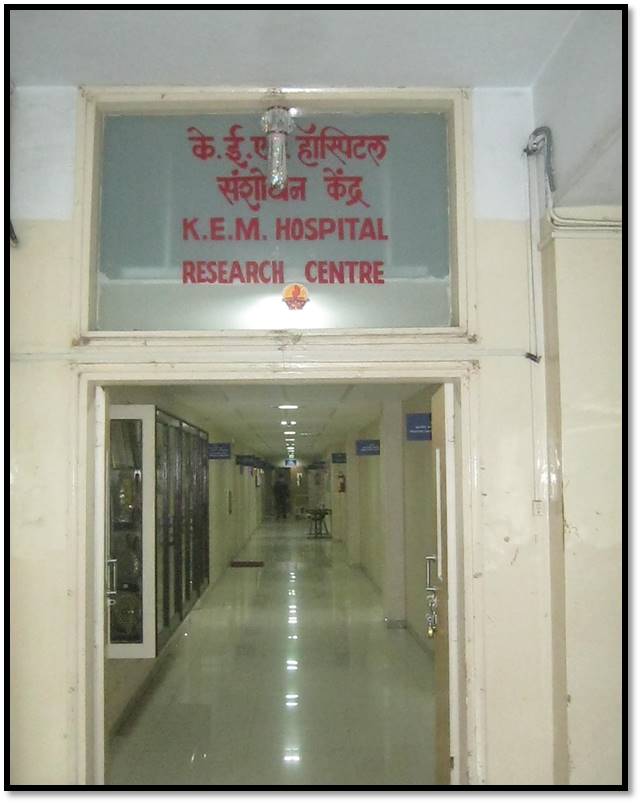
For 40 years, the KEM Hospital Research Centre (KEMHRC) has been engaged in clinical, laboratory, and community-based research that has placed it among the premier institutions in the country. KEMHRC is affiliated to the KEM Hospital in Pune, which has 17 speciality departments that conduct all their research activities and interventional studies through the Research Centre. This includes hospital- and community-based paediatric and adult vaccine trials; neonatal, maternal and child health research; demographic and epidemiological surveys; clinical research; implementation research, operations research; and social science research.
About
K.E.M. Hospital Research Centre
For 40 years, the KEM Hospital Research Centre (KEMHRC) has been engaged in clinical, laboratory, and community-based research that has placed it among the premier institutions in the country. KEMHRC is affiliated to the KEM Hospital in Pune, which has 17 speciality departments that conduct all their research activities and interventional studies through the Research Centre. This includes hospital- and community-based paediatric and adult vaccine trials; neonatal, maternal and child health research; demographic and epidemiological surveys; clinical research; implementation research, operations research; and social science research.
KEMHRC receives national and international funding that enables it to conduct path-breaking applied, problem-oriented, and problem-solving research that focuses on the betterment of human health. It also reaches out to underprivileged communities with limited or no access to healthcare.
In September 2023, the Indian Council of Medical Research (ICMR) recognised KEMHRC as a Collaborating Centre of Excellence (ICMR-CCoE). Valid for five years (extendable), this recognition places KEMHRC among only 25 centres across India chosen to advance collaborative, multidisciplinary research in priority health areas. Building on its expertise in infectious diseases, vaccine trials, nutrition, health surveillance, digital health, and NCD research, KEMHRC will contribute to research reviews, capacity building, training, large community-based studies, and development of harmonised research protocols, thus helping to strengthen India’s biomedical research ecosystem.
The idea of a separate research centre came up during the Diamond Jubilee celebrations of KEM Hospital in 1972. KEMHRC was officially launched in 1973, with Padma Bhushan and Magsaysay Award winner Dr. Banoo Coyaji as its founding Chairperson. It was registered as an independent Society and Trust with the Charity Commissioner in 1985. Registered under the Department of Scientific & Industrial Research (DSIR), the Centre is also recognised by the Indian Council of Medical Research (ICMR) and the Council of Scientific & Industrial Research (CSIR).
The Centre’s initial focus was on laboratory-based research. With the support of Mr. Pramod Khosla and Mr. S. K. Kirloskar, renowned industrialists of the time, the Centre secured funding to expand its research into the field of community health. In 1978, Dr. V. N. Rao, former Director of Health Services, Maharashtra, and retired Senior Deputy Director General, ICMR, assumed the responsibilities of Director Research. Under his stewardship, research activities became more comprehensive and several clinical studies related to various life-threatening diseases were undertaken. International agencies like Ford Foundation, International Centre for Research on Women (ICRW), and the Population Council, among others, collaborated with the Centre. This enabled KEMHRC to work on widely prevalent social issues such as abortion, maternal and child health, HIV/AIDS, sexually transmitted infections, domestic violence, child sexual abuse, adolescent health, and sexuality.
Community-based programmes are a priority at KEMHRC, and constant efforts are made to provide access to improved health care, especially in rural areas near Pune. Vaccine trials reach the most underprivileged populations, bringing them a service that would be otherwise unaffordable or inaccessible. KEMHRC addresses the needs of vulnerable, hard-to-reach tribals in remote areas through training, capacity building, infrastructure support, health care, and nutrition interventions.
Trying to uplift the lives of people through vocational training is also a major focus area and KEMHRC conducts several vocational courses to empower underprivileged women in rural areas; teaching these women new skills helps make them independent earning members of society.
A three-tier system comprising the Board of Trustees, General Body, and Management Committee monitors the activities of KEMHRC. The Scientific Advisory Committee, consisting of nationally and internationally-renowned scientists, critically evaluates the progress of various scientific projects. Since April 2003 the Centre has its own Institutional Ethics Committee, established as per ICMR guidelines.
Well-appointed, with a team of committed researchers and dedicated health workers, the Centre has EDP facilities, a 100-seater air-conditioned auditorium, two conference halls, and vehicles for field work. Its publications include an Annual Report featuring relevant information on ongoing research projects; a bi-annual newsletter; and regular contributions to international and peer reviewed journals.
Over the years, KEMHRC has established itself as a leading research institute, gaining recognition and respect from institutions of national importance as well as prominent international agencies. Rooted locally yet connected globally, the Centre offers its collaborators unrivalled longitudinal and cross-sectional datasets, proven trial infrastructure and a culture of open science—an unparalleled foundation for predictive modelling, product development and evidence-based policy.
KEMHRC’s commendable research work has made a significant contribution to the field of medical research, bringing hope and healing to millions of people, and influencing healthcare policies worldwide. The Centre’s commitment to research and service has made it an asset, not only to the KEM Hospital and the medical community, but to society at large.
History of
KEM Hospital Research Centre
Pune has always been associated with great social reformers, freedom fighters, and educationists. In the early 20th century, Poona (as the city was then called) was at the forefront of the Indian Independence movement, with several citizens leading the charge for social reform alongside the call for freedom from British rule.
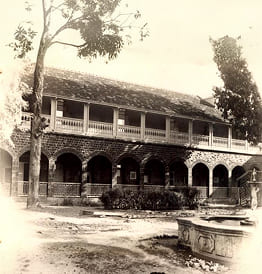
In 1912, recognising the urgent need for affordable healthcare for the city’s underprivileged, local philanthropist Sardar Srinivas Moodliar established a small charitable dispensary on four acres of land that he owned. In 1921, the city recorded 876 infant deaths per 1,000 births; and due to the lack of medical facilities and midwives, maternal mortality was high. Over the next 30 years the modest little dispensary grew into a 40-bed maternity hospital with its own labour room, an operation theatre, and nurses’ quarters. In a culture where home deliveries were the norm, the hospital was able to secure the trust of the local people, and in the 1940s it accounted for an unprecedented 22.55% of all registered births in the city.
Pune has always been associated with great social reformers, freedom fighters, and educationists. In the early 20th century, Poona (as the city was then called) was at the forefront of the Indian Independence movement, with several citizens leading the charge for social reform alongside the call for freedom from British rule.
In 1912, recognising the urgent need for affordable healthcare for the city’s underprivileged, local philanthropist Sardar Srinivas Moodliar established a small charitable dispensary on four acres of land that he owned. In 1921, the city recorded 876 infant deaths per 1,000 births; and due to the lack of medical facilities and midwives, maternal mortality was high. Over the next 30 years the modest little dispensary grew into a 40-bed maternity hospital with its own labour room, an operation theatre, and nurses’ quarters. In a culture where home deliveries were the norm, the hospital was able to secure the
trust of the local people, and in the 1940s it accounted for an unprecedented 22.55% of all registered
births in the city.

In 1944, Dr. Banoo Coyaji, a 27-year-old locum, became the Chief Medical Officer of the Hospital. The
young graduate of the Grant Medical College in Mumbai discovered that an overwhelming number of women were approaching the hospital for obstetric emergencies. She soon realised this was the result of malnutrition, inadequate pregnancy monitoring, unspaced multiparity, and ignorance of family planning. The need of the hour was advocacy and education of women, and urgent expansion of services.
A small set-up with just four maternity beds evolved into a 550+ bedded, multi-specialty, tertiary-level teaching hospital. This remarkable growth was largely driven by the vision and leadership of Dr.Banoo Coyaji, whose outstanding contributions to medicine and public health earned her both the Padma Bhushan and the Ramon Magsaysay Award.
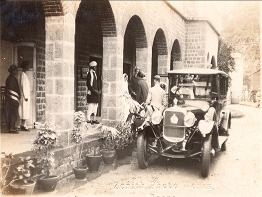
What the far-seeing Dr. Coyaji put into motion paved the way for continued expansion and updating of diagnostics and treatment facilities. Comprehensive maternal and child health care was provided to patients regardless of caste, creed, or economic capacity, and KEM Hospital gained a reputation for reliable and affordable medical care.
At the Diamond Jubilee of the hospital in 1972, KEM announced a rural health project in Vadu Budruk, a poverty-stricken, drought prone area in Shirur Taluka, about 40 km from Pune. Other expansion plans during the milestone year included a teaching hospital, outreach services, and a research centre focused on diverse socio-medical, community-based medical research.
At the Diamond Jubilee of the hospital in 1972, KEM announced a rural health project in Vadu Budruk, a poverty-stricken, drought prone area in Shirur Taluka, about 40 km from Pune. Other expansion plans during the milestone year included a teaching hospital, outreach services, and a research centre focused on diverse socio-medical, community-based medical research.
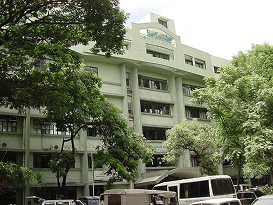
Over the next five decades KEMHRC worked tirelessly to further its mission to improve community health through rigorous science, cutting-edge clinical trials, and innovative service delivery. Two Centres of Excellence anchored this mission ― the Paediatrics Unit, with an in-house rehabilitation facility, which combines comprehensive child-health services with high-impact clinical and epidemiological research; and the Vadu Rural Health Programme (VRHP) under which the Vadu Health & Demographic Surveillance System (HDSS) operates, acting as a real-world ‘living laboratory.’ Outreach programmes have also been set up in the remote areas of Mancher and Pabal. The Women’s Health and Development Centre set up in Pabal in 1993 has been empowering rural women and girls through health and vocational training that help make them self-reliant and self-confident.
Digital innovation has helped KEMHRC to stay abreast with changing times. The container-based Micro Health Centre (MHC) in Pabal delivers teleconsultations backed by real-time electronic records, cloud-enabled databases, and an integrated referral system.
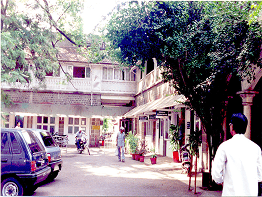
KEMHRC shares its microdata through iSHARE, the INDEPTH Sharing and Access Repository, which is available on the INDEPTH Data Repository (www.indepth-ishare.org). The idea was first conceived at the Vadu HDSS nearly a decade ago. This concept of making micro datasets accessible via a secure global platform was piloted and launched in 2007 with participation from a few member sites. Over time, with technological advancements, the platform was enhanced and expanded to include many more member sites.
KEMHRC has always focused on long-term evidence generation. The Pune Low Birth Weight and Pune Maternal Nutrition cohorts formed by the Diabetes and Paediatric units have focused on various aspects of maternal and child health and inter-generational effects. They have retained 90–95% follow-up for more than 20 years and have been the basis of many pathbreaking outcomes published nationally and internationally. The Centre has been at the forefront of community-based and multicentre vaccine trials, contributing significantly to national and global immunisation efforts. By conducting ethically sound, scientifically rigorous trials in real-world rural and urban settings, KEMHRC ensures that vaccine safety, efficacy, and accessibility are thoroughly evaluated across diverse populations. Its strong community engagement, trained field teams, and robust data systems make it a trusted partner in multicentre collaborations, including trials for maternal, infant, and adult vaccines
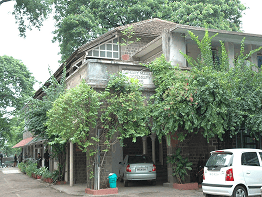
Since its inception in 1973, KEMHRC has become a leader in community-based research, clinical trials, digital health innovation, and long-term cohort studies. Its Centres of Excellence— particularly in paediatrics and rural health—drive impactful science and services, while initiatives like iSHARE and community-based vaccine trials have positioned KEMHRC as a trusted national and global research partner.